Passage — Part I: The Hotel
Contents · Part II — The Arrangement ›
Part I — The Hotel
1 — Arrival
Betty arrived in Marseille without a suitcase. Only a modest backpack. At Saint-Charles station she did not linger; she moved with the others without looking around. The city was unfamiliar, but she was not looking for orientation. She was looking for direction.
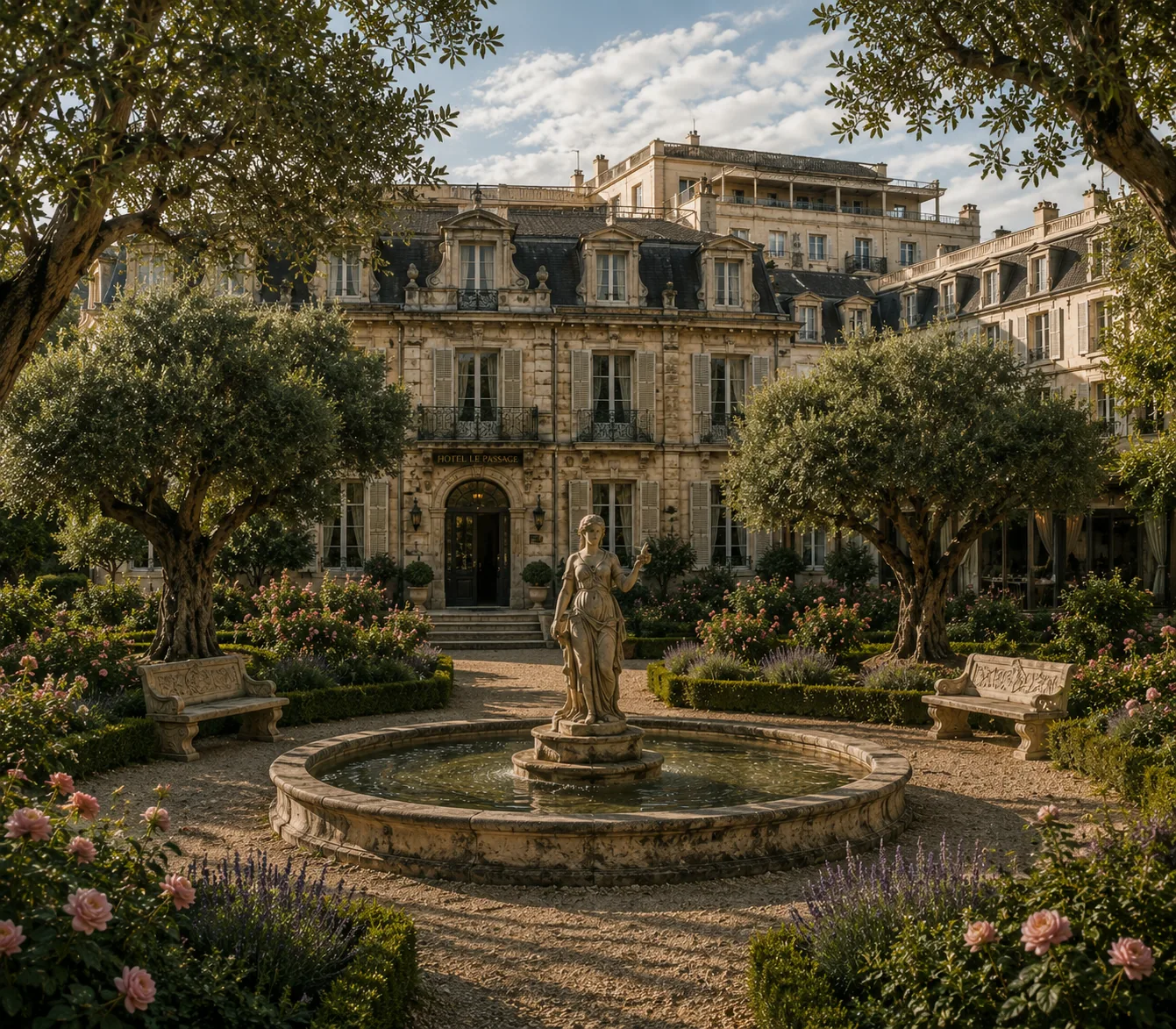
Marseille had never been a quiet city. It only knew how to appear that way. From the street came noise without a single source: voices, engines, the sea striking the rocks. Everything arrived from every direction, as though the city had no centre, only movement. The Passage Hotel did not belong to that movement. It stood above the Old Port, on a slope beginning almost imperceptibly between two narrow streets too unimportant to remember. Cars slowed there for no apparent reason.
The Passage Hotel was not on the waterfront. It stood above it, just far enough away for the sea not to appear at once. First came the city: rooftops, antennas, narrow streets climbing and crossing one another. Only then, between the buildings, a blue line appeared. The approach turned away from the street into a narrow lane and a gentle rise. The gate was not high, but it was heavy. Beyond it, the sound changed. It did not disappear; it softened, as though passing through something yielding. The garden was cultivated without looking manicured, controlled in its disorder. The path crossed a garden that seemed older than the building. Olive trees shaped, but not perfectly. Lavender without an insistent scent. Everything maintained so that it looked as though it maintained itself.
At the centre of the garden stood a fountain. The sculpture in it was new, made to look old: false patina, cracks without the depth of real time. One hand was missing. It lay on the rim, as though it had decided not to remain part of the body.
Olivier, the gardener, picked it up without surprise.
“It won’t hold.”
Flobjan, the hotel’s floral arranger, stood a little farther away with shears in his hand.
“Maybe it isn’t meant to.”
Olivier did not answer. He replaced the hand, pressed it into position and held it there for several seconds.
“Everything is meant to hold.”
He let go.
The hand fell again.
Betty passed them without stopping. Between the plants, her eyes met Flobjan’s for a moment. The glance did not linger, but neither was it accidental. To her surprise, she felt a pleasant shiver run down her spine.
She did not use the main entrance. She went in through the service door.
Madame Tanja, the hotel housekeeper, was waiting for her.
“Welcome. This is your locker,” she said, with little explanation.
Staff always entered from the side, through doors designed not to be noticed. The air there was cooler, stripped of the garden’s scent.
The hotel displayed elegance and discreet control. Carpets absorbed footsteps, the lighting cast almost no shadows, and people moved without colliding. Betty saw reception only in passing: light, smooth surfaces, voices lower than necessary. Everything was orderly, which did not mean that everything was right.
She turned into the service corridor. The walls were covered in a material on which nothing seemed able to remain. The staff lift arrived quickly. Her assignment was already posted on the board in the changing room: sixth floor, connecting rooms 601 and 602.
At the hotel, the sixth floor was considered easier; the more important guests were given the upper floors. It would do.
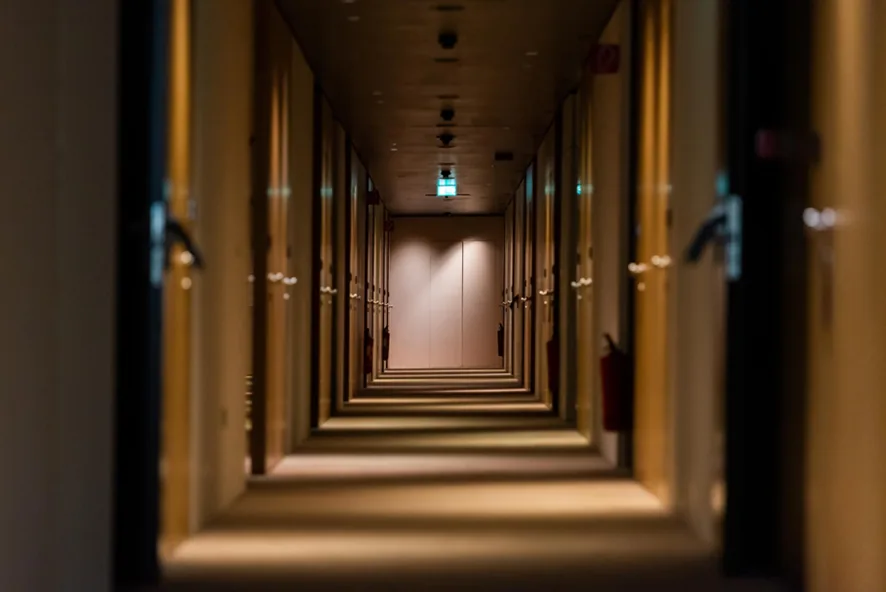
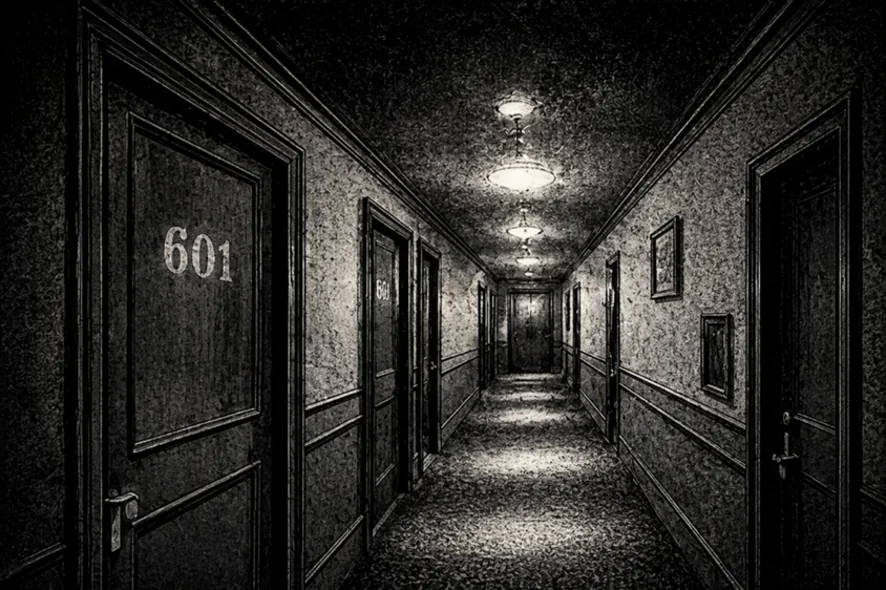
The corridor was long, straight, uninterrupted. Identical doors at identical intervals. Everything calculated not to attract attention, which made every deviation visible.
She stopped for a moment. She did not look at the individual rooms, but at the whole.
Everything was in its place.
Everything looked the same.
Too much the same.
Her eye had not yet found the displacement.
She unlocked 601 without hesitation.
Inside: order.
Too much order.
A suitcase stood open, but nothing inside had been disturbed. A cosmetics bag lay on the table. The curtains were drawn halfway.
She went to the table.
The cosmetics bag was open: mascara, lipstick, powder. The mascara was closed, still sealed, untouched.
She picked it up, held it for a moment, then returned it to its place.
She looked around.
The room was in perfect order.
That was strange.
Her gaze remained there for another moment, then moved away.
She went to the connecting door leading to 602.
It was unlocked.
She had not expected that.
She did not open it fully.
She only looked through.
2 — Space
Morning at the Passage Hotel did not begin; it merely replaced the night.
The next morning Betty arrived early. Her rented apartment was a few streets downhill, without a view of the sea, close enough for her to reach the hotel without thinking about the route.
The staff entrance was unlocked. She went in without lingering.
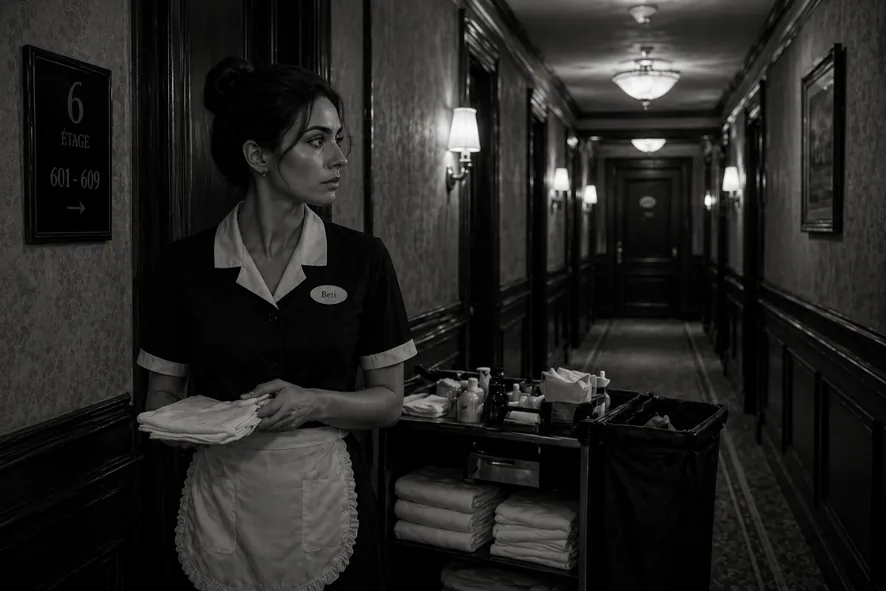
The changing room was lit by a bright, almost surgical light. A row of lockers, identical spacing, identical height. She opened hers. The uniform hung in the middle, clean, scentless except for the smell of cleanliness. She dressed without hurry. The movements were learned: buttons, sleeves, alignment.
There was nothing in the mirror that needed correcting.
She stepped into the service corridor, a narrow passage behind the walls of the rooms, with exposed installations and doors bearing numbers guests never saw. She passed a linen cart and the closed laundry-room door. The smell of detergent was brief and sharp.
The staff lift was already there.
On the sixth floor, the corridor looked exactly as it had the day before.
The card for 601 indicated presence, although presence did not necessarily mean occupancy.
She opened 602. Empty — in a way that excluded habitation. As expected.
She went to the bedside table. Only then did her eye settle on a thin layer of white dust along the edge of the wood.
She closed the door, knocked, waited, and entered 601.
The room was the same as before. That was the problem. The mascara was closed, the suitcase unmoved, the curtains in exactly the same position. It was less a room than a staged scene without use, as though no one had been there — or someone had been there too carefully.
Betty stood between the two rooms without fully entering either.
The difference was not in the rooms themselves, but in the place where they touched.
Her gaze settled on the point where the carpet of one room continued into the other. The pattern matched with unusual precision.
She leaned slightly. From another angle, the line separated, as though someone had aligned two things that did not quite meet.
She straightened at once. Everything looked the same again.
She was no longer certain whether she had seen the difference or merely expected it.
She closed her eyes for a moment. The pattern was familiar. Not from the hotel. She had seen it before.
Now she could no longer say that everything was in order.
The question was how long it had already been going on.
Intermezzo — Instructions
Madame Tanja, the hotel housekeeper, a woman with sharp features and a slightly rough voice, explained:
You do not clean a room; you return it to the state it was in before the stay.
In a hotel, a chambermaid must not exist in another person’s life. That does not mean she leaves. It means she leaves no trace.
Madame Tanja — a woman without a scent — spoke quietly and sharply. Her sentences were short, without explanation. They did not sound like advice, but like law.
A chambermaid does not peer. She does not let her gaze linger. She does not read what is not hers.
The cart is a small moving world: towels stacked like soldiers, soaps sealed, bags ready. Nothing must stand out. Nothing must attract attention.
Entering a room is always the same: three knocks, a pause, the key. If the guest is inside, withdraw. If not, the room belongs to no one anymore.
A room after a guest is not empty. Quite the opposite. It is full. The hollow in the pillow retains the shape of a head. A towel is an interrupted thought. A hair on the sink is evidence. An open suitcase — a wound that asks for no explanation.
The task is not to understand any of it. The task is to remove it.
The order is always the same. The curtain is opened first — light as disinfection. The bed linen is stripped away in a single movement — removing the dream. Surfaces are wiped — erasing the event. Objects are returned to neutrality.
In the end, the room must look as though no one had ever been there.
There are things one must never do. A suitcase is not opened. Papers are not read. Money is not kept. Nothing is used. Objects are not moved without reason. Guests are not remembered.
The rule that is never spoken aloud is different: you must not imagine their lives. Because once you begin, you are no longer cleaning the room. You are entering the story.
And that is dangerous.
On the bedside table — a ring. Not expensive, but worn. The chambermaid picks it up only to wipe beneath it. She holds it a moment longer than necessary.
It is warm.
That is the only moment in which she touches someone else’s life.
Then she puts it back exactly where it was, as though it had never existed.
In a hotel, a chambermaid does not clean rooms. She erases the evidence that people ever lived inside them.
Betty ignored most of these rules. There were unwritten rules too.
The chambermaids said Madame Tanja did not inspect rooms. She used a trick. She simply walked from one to another and ran a finger along the top edge of a picture frame. That was where dust — and whatever had not been cleaned — revealed itself most easily.
There were things one did not touch. Needles were not touched. No one checked what they were for.
Chambermaids did not ask for tips, but they knew where tips were left. Not on the table. Always on the pillow. Or beneath the ashtray. If money lay in the middle of the room, it was not touched. It had not been left. It had been forgotten.
A forgotten phone was not touched either. Not when it lit up. Not when it rang. Messages appearing without being summoned were not read. It was enough that they had been seen.
3 — The Room
The first disturbances in a hotel do not begin with noise. They begin where something no longer fits completely.
The next morning Betty did not leave the sixth floor at once. She remained in 601 for a while, no longer looking at individual objects but at the relations between them. The suitcase was open at an angle suggesting transience, but not occupancy. The cosmetics bag had been left where it could be seen. The glass on the bedside table had been washed, though not by the staff: too carefully, without a ring of water, without the imprint of haste. The curtains were still drawn halfway, as though someone wanted the room to look as if a habit existed there.
Real habits are never so exact.
She ran a finger along the edge of the dresser. No dust. Nothing. The room had been cleaned before it was due to be cleaned. That was worse than disorder. Disorder at least belongs to someone. Who had cleaned the room? The guest? Why?
She concluded that another chambermaid must have entered 602 before her.
When she stepped into the corridor, the cart was already beside the lift: towels stacked, bottles of cleaning fluid, spare linen — everything in its place. Nothing in the hotel was left to chance, not even the things used to remove the consequences of chance.
The floor supervisor came out of 608 with a tablet in her hand.
“601 still isn’t done?”
“It is,” Betty said. “But it isn’t finished.”
“Then why are you standing there?”
“602 isn’t empty.”
For the first time that morning, the woman looked up.
“Excuse me?”
“Nothing.”
It was not an answer, but it was enough. In the hotel, people often chose not to ask a second time.
Betty took the cart and headed towards the staff lift.
On the level below reception, the hotel revealed its inner anatomy: corridors with fire doors, the clean-linen store, a room for broken lamps, the laundry breathing damp heat. Down there, the hotel made no attempt to be beautiful. It was simply what lay behind — what the guest did not see.
Through a glass panel she caught part of the lobby. At first glance nothing was happening. The receptionist was speaking more quietly than usual. The porter stood too close to the desk. A man in a dark-blue jacket held a room card and did not take his eyes off the receptionist.
Later Flobjan waited for her by the side exit.
“They’re asking for the woman in 601.”
“Who?”
“A man who says she’s late for a meeting.”
Betty said nothing.
“Have you seen her?”
“I’ve seen the room.”
“That isn’t the same thing.”
When she returned towards reception, the man was gone. The manager stood in his place.
“You’re working six?”
“Yes.”
“Were you in 601 this morning?”
“Yes.”
“And?”
“The room is tidy.”
The manager paused.
“The guest isn’t answering the phone.”
Betty looked at him. She did not ask which phone.
At the Passage Hotel, the telephone in a room rang when the system confirmed presence.
“You called?”
“Yes.”
“And?”
“It rings.”
The manager glanced briefly towards the doors.
“Maybe she isn’t inside.”
“The card shows presence.”
Betty looked at him.
“Cards don’t know everything.”
He held her gaze for less time than he should have.
“Go back upstairs. Discreetly. We don’t want a situation.”
The first time she had entered the room as a chambermaid. She had opened the windows, checked the bathroom, straightened the towels, the basin and the mirror, restoring everything to the hotel’s idea of order. Nothing had seemed unusual then.
Now she was entering it for a second time—not to clean the room, but to read it.
She returned to the floor alone. The corridor seemed narrower now.
She unlocked 601 and this time went farther in. The bathroom was dry. The towels untouched. The bed neat, the pillow slightly hollowed near the edge rather than in the centre, as though someone had sat there rather than slept.
On the carpet beside the armchair she noticed a minute trace of white dust.
She knelt. Did not touch it.
White. Fine. Like dust from the surface of an object.
In 602 she stopped. The same trace on the carpet.
The same small object on the bedside table.
It was no longer an impression. The same thing was present in both rooms.
Something that crumbled had passed through them: a solid surface shedding fine particles, like the arm of the sculpture in the garden fountain.
When she came out of 602, the porter was waiting.
“They want you downstairs.”
“Who?”
“The manager. And the police.”
It did not sound dramatic. But neither was it ordinary.
Two men sat in the lounge. One looked at the room. The other looked at her.
“You were the last person to enter 601?”
“Yes.”
“And you saw nothing unusual?”
Betty looked at him.
“Depends.”
“On what?”
“On what you mean by unusual.”
At the Passage Hotel, people usually disappeared into stories before they disappeared in reality.
This time the order was different.
4 — Betty
The staff register said: Betty Delaunay. A short name, without obligations. At the Passage Hotel, that was an advantage.
She did not use her real name.
Sofi. Sophie de Montreuil. That name was not spoken in Marseille.
She had come from Nice, from a house where things had provenance and place. A lawyer for a father. Books arranged in rows that seldom moved. A sister who was a public prosecutor. Order taken for granted.
Sofi worked with objects: a curator, an art historian and, inevitably, something of an archaeologist. Sometimes, at her sister’s urging, an expert witness on works of art in Nice. She could distinguish an original from a copy, age from imitation, the marks left by use — small differences that are not explained, only seen.
The problem was that they were not enough. Especially not for Justine, the public prosecutor in Nice.
In one case, there had been an object that was not what the official record claimed it to be. The difference was slight: insufficient for the court, final for her. The object remained in the file as settled, attributed, authentic.
She did not.
She tried to defend the sculpture. Without success. The truth was in the object. The law was in the copy.
When she realised that behind an apparently harmless question of attribution lay money, the highest levels of government and part of the police — her sister among them — she decided to disappear from view. The change of identity and residence was swift, almost technical.
Not an escape. A break.
Leaving had not been dramatic. Only a change of place. Marseille did not seem far enough away for an escape, but it was far enough for a break.
At the Passage Hotel, the change was not concealed. It was built into the place.
The hotel did not ask for provenance. It asked for function.
A chambermaid does not need a past. She needs a rhythm.
On the luxury upper floors, staff had to be present and invisible at the same time. Passages, freight lifts, blind corners and exact routes made that possible. Chambermaids appeared in corridors and vanished with astonishing speed. The important thing was never to let the gaze rest on a guest.
Betty understood quickly.
Through the glass of a passage she could see part of the lobby. The lobby was one of the Passage Hotel’s best disguises. It looked open while remaining entirely controlled.
A marble floor, two large arrangements of white flowers, pale leather armchairs in which no one ever sat entirely at ease, a reception desk long enough to make a guest feel cared for but not so long as to seem cold. On the wall, an abstract painting in colours unlikely to offend anyone.
Betty did not approach. She watched through reflections, glass, passages.
Later Flobjan waited for her by the side exit, where flower boxes were left and the smell of chlorine mingled with the scent of plants.
“They’re asking for the woman in 601.”
“Who?”
“A man who says she’s late for a meeting. Too calm to be her husband. Too personal to be a colleague.”
“Then what is he?”
Flobjan shrugged.
“Someone who doesn’t like having to ask.”
Betty said nothing.
Flobjan asked almost the same question as the housekeeper.
“Have you seen her?”
“I’ve seen the room.”
“That isn’t the same thing.”
“For me, the two often aren’t separate.”
Flobjan put the empty vases down by the wall. He was one of the few people who did not try to force her sentences open.
“Olivier is fixing that arm again.”
“I know.”
“He used stronger glue this time.”
Betty looked at him.
“That won’t help.”
“I think so too.”
In the small mirror near the changing room she briefly caught sight of herself: hair neat, glasses steady, face without expression. That face did not belong to Sophie. It did not have to belong to anyone.
Faceless Betty.
She had found the apartment quickly, while still in Nice, through an advertisement.
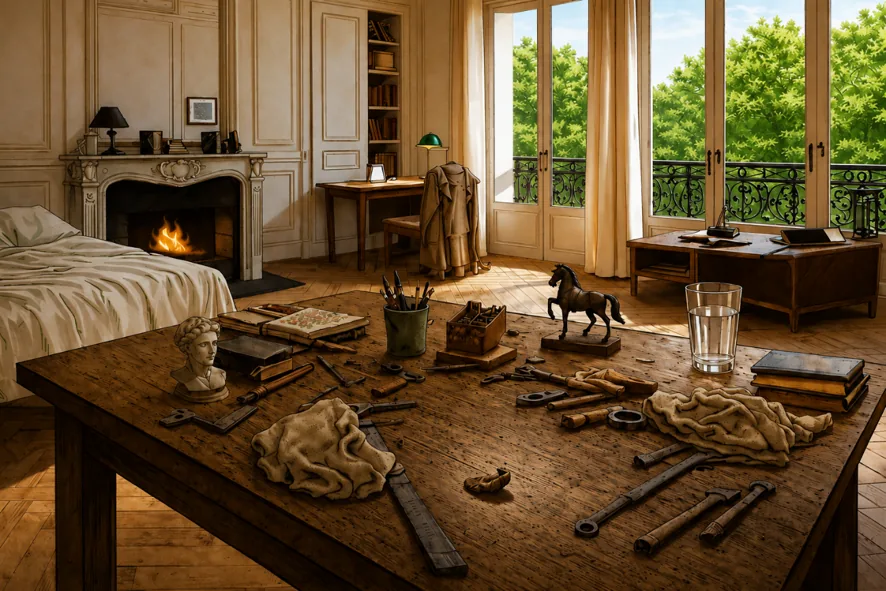
One room, tall windows, double doors, wall panelling, a fireplace, parquet that creaked in one place. Light that did not reach everywhere.
Objects arranged in working disorder. Small sculptures, fragments without wholes: hands, heads, torsos. Some brought with her, some found.
On the table, tools: brushes, tweezers, cloths, bowls of water. Signs of work.
At the hotel she removed traces. Here she restored them.
The movements were the same. The purpose was different.
At the Passage Hotel she was Betty. Here she was Sofi.
A small difference. Enough.
She had not come to Marseille to begin again.
She had come so as not to continue.
5 — The Apartment
The apartment was quiet in a way that did not belong to the city. Not because sounds failed to reach it, but because they seemed to hesitate before entering.
Betty closed the door behind her and took off her shoes without hurry. She left them against the wall, in the same place. She draped her jacket over a chair. She did not remove the wig until she had crossed the room, as though she first had to cover a certain distance for the transformation to mean anything.
There was no mirror where one entered the apartment. Deliberately.
She went to the table.
The objects were arranged, not ordered. There was no disorder, but neither was there any attempt to create an order visible at first glance. Small sculptures stood at different heights, some on wooden bases, some directly on the surface. Fragments: hands without bodies, heads without expression, torsos without direction. One figure lay on its side, as though it had fallen and never been set upright.
She did not lift it.
She sat down and picked up a fine brush. The movements were the same as at the hotel, but slower. Here she was not erasing the notes left by a space; she was separating them. Dust was part of the object, not a flaw on its surface.
On one small head, almost invisible, a darker trace remained along the line of the neck. She lingered there. It was not dirt. More like the mark of touch.
An object does not remember an event. It remembers the way it was held.
Sofi — here in the apartment, she could be Sofi — put down the brush and picked up another piece: a small hand, broken off at the wrist. The fingers were curved into an unfinished gesture. The surface was worn where it had most often been touched: thumb, index finger, edge of the palm.
Someone had held that hand often. Not for any function. They had lingered.
She tried to fit the unstable hand onto the figurine’s torso. For a moment it seemed to work, then slipped away completely. Uneven fractures remained on both pieces.
She smiled and thought of the garden, Flobjan, Olivier and the fountain sculpture.
She set it down and moved to the next object. Work in the apartment had no fixed sequence. It had a logic revealed only in the doing. She did not choose objects by value but by resistance. Those that were silent waited. Those that spoke demanded time.
At the Passage Hotel it was the opposite. There, objects had to stop speaking quickly.
In the rooms she learned the same things she learned here, only without lingering. An open cosmetics bag said more than a closed one. A washed glass said more than a dirty one. A bed that had not been used said more than one that had.
Intimacy is not in what is visible. It is in what is avoided.
Sofi took a cloth and wiped the edge of the table, an automatic movement made without thought. Then she stopped. In the apartment she did not have to erase anything. That was a difference the body did not forget at once.
She ran her fingers over a torso and stopped at a crack that had not belonged to the original form. The break had happened later.
You can always see that. Just as you can in a room.
601 had not been used at the time when it was supposed to have been used. 602 was empty, but not entirely. Something remained there that did not look accidental.
She stood and opened the window. Air from the city rushed in without hesitation. Its smells collided with those of the apartment and did not remain.
She leaned against the frame. Rooftops, aerials, a sliver of harbour between buildings. Everything moving, everything changing.
In her own space, nothing moved without reason.
In the hotel, nothing moved without consequence.
She closed the window.
The small hand remained on the table, separate from everything else but precisely turned.
She did not put it back.
Some things do not need to be put together to be understood.
At the Passage Hotel she entered other people’s lives through what they exposed to view.
Here she entered time through what remained.
6 — Two Rooms
In 601 there were no signs of occupancy, but there were signs of arrangement.
The glass on the table was aligned with the edge of the bed. Precisely aligned. The suitcase lay open at an angle that allowed inspection, but not use. The cosmetics bag had been arranged without visible traces of touch. The lipstick on the table had not been unwrapped.
Betty approached the mirror. She did not look at the reflection. She looked at the edges.
There were no fingerprints on the glass. None on the handle. None on the surface of the table.
As though someone had removed every piece of evidence of presence.
She moved on to 603.
The room was marked for cleaning. The bedclothes were crumpled, pillows scattered, a towel thrown over a chair. Clothes lay about. The glass on the bedside table had left a thin ring of water. Small deviations on the floor showed unmistakable movement.
She stayed only briefly, long enough to see the difference.
In 603, there was nothing that needed to be hidden.
When she came out, she stopped in front of 602.
She did not open it. There was no reason.
The room was empty, ready for the next arrival, with no visible residue.
She remained there longer than necessary, not because of suspicion but because of something that had not yet acquired a shape.
She started down the corridor. After a few steps, she stopped. Went back.
There was no work order for that room.
She unlocked 602.
The room was empty: bed linen taut, surfaces clean. Nothing suggested occupancy.
She paused on the threshold, then took one step inside.
Her gaze passed over the bed, the bedside table, the floor.
Near the edge of the bed, the carpet fibres were slightly flattened in one direction — not an imprint, but a place where the material had briefly yielded beneath a weight and then risen again.
Beside it, barely visible, white dust.
She lowered her fingers until they hovered just above the fibres. She did not touch them.
It was not a footstep. Only a pause.
She stopped on the threshold before leaving and drew a short, unnecessary breath.
Something was the same in both rooms.
She did not yet know what. She closed and locked the door.
And it was as though the white dust had followed her ever since she arrived in Marseille: from the fountain, through the rooms, all the way to the worktable in her apartment. She thought of old tales, of myths about labyrinths — and of something else from her past.
As though she had seen it before.
Not here.
7 — Objects
In a hotel, the most delicate moment comes when a chambermaid enters a room while the stay is still in progress.
Three knocks. Pause. Master key. If there is no answer, she enters. The room is not empty.
Only the person it belongs to is absent.
In a hotel, the chambermaid is the only person who enters someone else’s life as part of her official duties.
A legitimate act. Intimately problematic.
She must not pry, yet she must see.
She moves objects. Touches them. Breathes other people’s smells. Then removes them.
She can tell whether someone has made love or quarrelled. See semen or blood on a sheet. The impressions left on a bed. A guest’s status from clothes, cosmetics, make-up. Precision or carelessness.
Every half-hour — another life. New objects. New relations. Different smells.
That was her moment.
She did not work automatically. She assessed the lives of invisible guests.
In her real profession, she had studied objects. Here — human characters and relationships.
Not antiquity. Life, and yet the mystery was the same.
As though she had not changed professions — only accelerated.
In room 608, a hairbrush lay on the table.
Several long, pale hairs remained caught in it.
Betty did not pick it up at once. First she looked at the way it lay. The handle pointed towards the window, as though it had been left in haste, though not quite — as though the movement had stopped before completion.
She picked it up. Light. The handle worn where a hand usually held it.
She opened the drawer.
Inside were three lipsticks, different shades, the same brand. None used to the end.
She returned them to exactly the same place.
In room 612, a man’s suitcase stood half-open. Shirts were folded precisely, but not perfectly flat. A crease through the middle showed that they had been put back rather than taken out. Someone had opened the case, checked, and closed it without using anything.
On the bedside table — a watch. Stopped.
Beside it, an almost invisible change, apparent only when the surface was viewed from an angle. A fine film that seemed not to lie on the table, but inside it.
It did not belong to the wood.
Betty did not touch it.
In room 617, the bathroom was immaculate. Cosmetics arranged as though in a shop. Bottles in a line, labels facing forward. Towels folded, but without signs of use.
This was not self-care. It looked like a performance. Betty moved one bottle.
Beneath it — a ring of moisture, invisible until the bottle shifted.
Several crumpled tissues lay along the edge of the sink. One was still damp.
Against the porcelain — smeared mascara.
They were the only evidence of life in the room.
She put the bottle back.
In a hotel, objects are returned to their places not so that they will be tidy.
But so that they will stop speaking.
8 — The Garden
The light in the garden was different from the light inside the hotel. Not brighter — uncontrolled. It fell across surfaces without lingering.
Olivier stood beside the fountain, bent over the sculpture, a tube of glue in his hand. The arm rested against the body but had not yet been fixed. He held it still, as though waiting for the material itself to find its place.
Flobjan stood behind him, holding shears he was not using.
“Is it holding?”
Olivier pressed briefly and let go. The arm remained.
“It’s holding now.”
Neither moved.
A few seconds later, for no visible reason, the arm slipped, struck the rim of the fountain and fell onto the stone beside the water. The sound was short and dry.
Flobjan looked down.
“It won’t.”
Olivier picked up the arm, wiped it with a cloth and pressed it back against the body.
“It just needs to be fixed more securely.”
“Some things don’t hold better just because you press harder.”
Olivier did not look at him.
“Everything can be repaired.”
Flobjan shrugged.
“Not everything.”
Betty stood several steps away. She did not approach. She had nothing to say. She watched the place where the surfaces met.
The join was smooth, without resistance. The surfaces matched, yet found no purchase. And separated.
This time Olivier held the arm longer. His fingers whitened with pressure.
He let go. The arm stayed. For a moment.
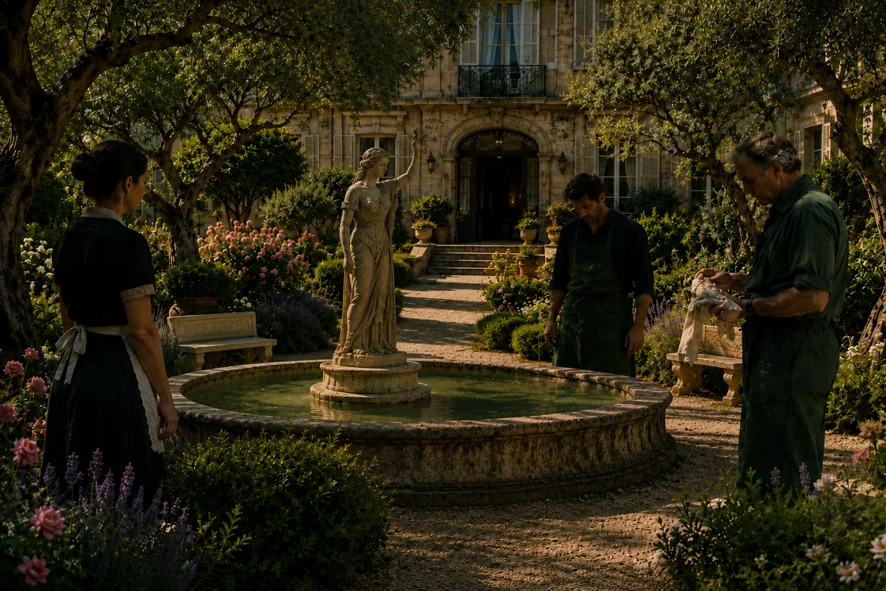
Then, almost imperceptibly, it gave way and fell.
Betty did not follow the falling arm with her eyes. She watched the place where it was supposed to hold.
She had already seen the same thing in the rooms.
There had been no movement in 601. There had been nothing in 602. Yet the emptiness was not empty. Only 603 retained something that truly belonged to a stay.
Olivier picked up the arm again and paused before putting it back.
“Maybe it needs a different angle.”
Flobjan looked at him.
“Maybe it needs a different body.”
Olivier laughed briefly, without sound, and pressed the arm into place again.
It slipped away without resistance.
Footsteps sounded on the approach — not the footsteps of staff.
Betty was still watching the join. No crack, no break, no visible error. Only a surface that looked as though it belonged to the arm but offered nowhere for it to remain.
The same. As in 601. As in 602.
At the Passage Hotel, nothing enters without changing the space. If nothing has shifted, someone brought the object in already in its place.
Betty turned towards the entrance. The lines of the flowers had been shifted again. She knew who had changed them, and knew it was not accidental.
Again she felt the shiver along her spine, her vertebrae like the uneven lines of a bouquet.
Behind her, the arm fell once more.
This time, no one tried to put it back.
9 — The Lounge
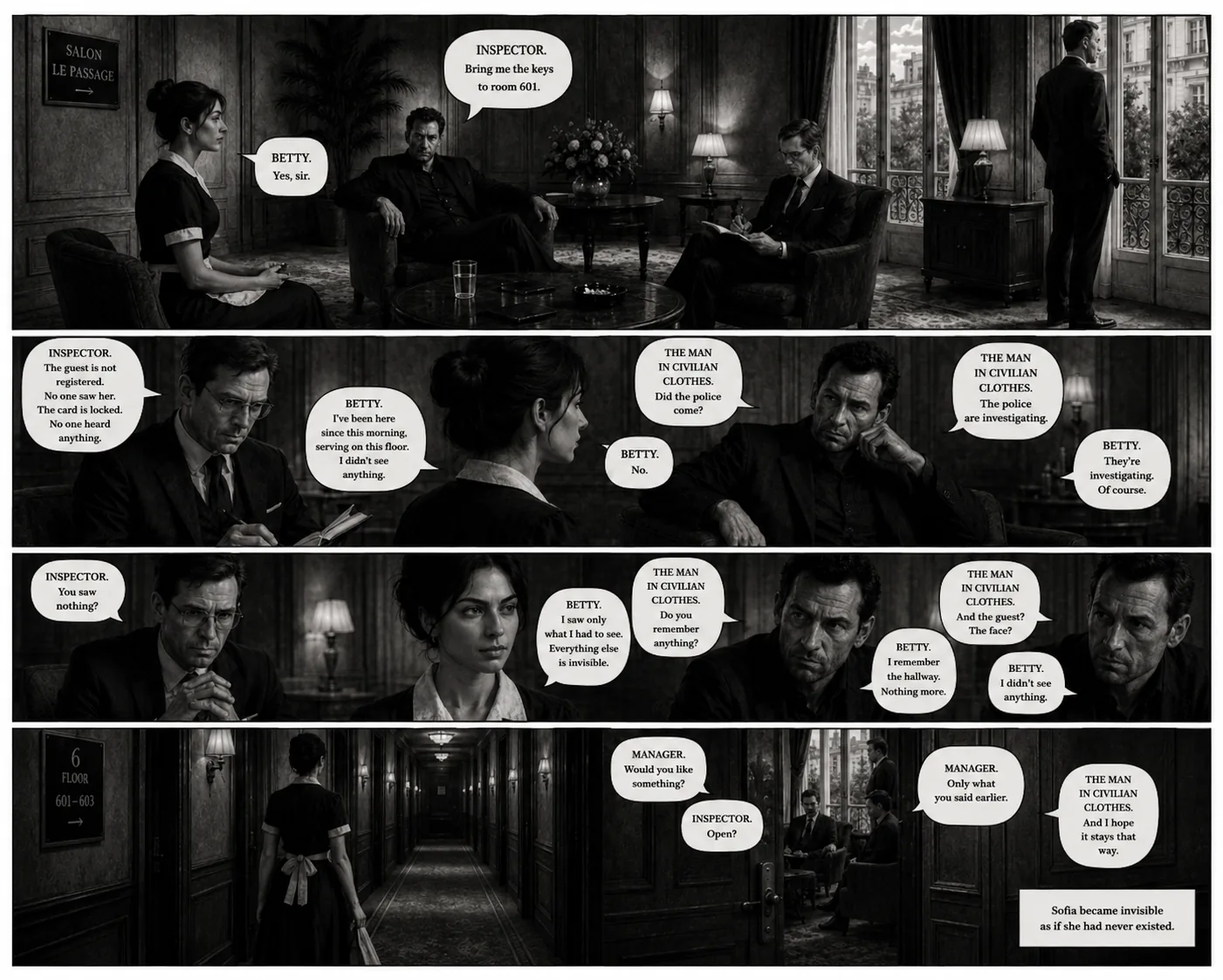
The lounge beside the lobby had been designed for conversations that left no trace of anyone having been there. The carpet was thicker than in the corridors, the walls covered in fabric that absorbed voices. A low table; chairs arranged so that no one sat directly opposite anyone else, but slightly at an angle.
Betty entered last.
The plainclothes man was already seated, leaning back as though the room belonged to him. The other man, a thin inspector, sat upright with an open notebook. The manager stood by the window, too present to be neutral.
“Sit down,” the inspector said.
Betty sat. She placed her hands in her lap. She neither crossed nor hid them.
“You work on the sixth floor?”
“Yes.”
“How long?”
“Long enough.”
He wrote something.
“You entered 601 this morning?”
“Yes.”
“And the room was in order.”
“Yes.”
He paused.
“What does that mean?”
Betty looked at him.
“It means nothing had moved.”
“That’s good.”
“Not always.”
For the first time, he looked up from the notebook.
“Why not?”
“Things that are used don’t stay where they are.”
Silence. The plainclothes man shifted slightly.
“What gets used in that room?”
“Nothing.”
“What do you mean?”
“The objects are there. The use is not.”
The inspector wrote briefly, clearly not everything.
“And 602?”
“Empty.”
“You said it wasn’t as empty as it looked.”
Betty nodded.
“Emptiness doesn’t linger by itself.”
The plainclothes man leaned slightly forward.
“Explain.”
It was the first time he had spoken to her.
“If no one is staying there, nothing changes. But the relationship between the objects has shifted.”
“What?”
“The way they stand.”
The inspector put down his pen and closed the notebook completely.
“Miss, we are not looking for relationships between objects. We are looking for a person.”
“Then you’re looking in the wrong place.”
The manager shifted his weight.
“The guest in 601 isn’t answering. Her belongings are there. Her card is active. You claim the room hasn’t been used.”
“I’m saying it hasn’t been used in a way that leaves a trace.”
The plainclothes man watched her without blinking.
“You’re not police.”
“No.”
“And yet you draw conclusions.”
“I don’t draw conclusions.”
She paused.
“I see.”
The inspector closed the notebook for a moment.
“What do you see?”
Betty thought of the arm in the garden. Of the join that would not hold. Of surfaces that matched but could not take hold of one another.
“Two rooms that are not separated in the way they appear to be.”
“The door is locked,” the plainclothes man said.
“The door doesn’t matter. It isn’t the barrier.”
He gave the slightest nod.
“Then what is?”
Betty lowered her eyes to the table, to its spotless surface.
“What passes between them.”
No one answered at once. Betty left.
As she stepped out of the lounge, the door remained slightly ajar.
“Send it to Justine.”
“Again?”
“She sees things we miss.”
A brief silence.
“And things that don’t exist,” another voice said.
No one laughed.
Sofi continued down the corridor as though she had heard nothing.
10 — The Arrangement
Nice was not far from Marseille. And yet there was a difference between them that routine could not soften.
In one, everything had measure. In the other — direction.
The house where the sisters had grown up stood on a rise, with a view that was not spectacular but predictable. Inside — an order unchanged for years. Shelves, files, photographs in frames that never moved.
Their father, a celebrated lawyer, believed in order. The law was not an abstraction to him. It was a tool to be used precisely.
His daughters understood him differently. Justine learned how to eliminate deviation. Sofi learned how to recognise it.
The difference remained invisible until it became impossible to cross.
From the outside, the case had been clear: illegal trade in works of art, intermediaries, documents that did not follow the objects. In the end, one accused person. Enough to close the case.
At its centre stood a collector. Not by name. By influence.
The sculpture without the arm belonged to him.
The arm did not exist in the records.
When it appeared, it did not arrive as part of a whole, but as evidence.
Sofi knew what she was looking at.
The surface did not match. The weight did not match. The accumulated time did not match the story.
It was not a copy. It was a substitution.
The real arm — the missing one — held a bird. Not made of the same material.
Metal.
Justine, the public prosecutor in Nice, saw all of it. But she said nothing. She issued the certificate. That was how she worked: closure without residue.
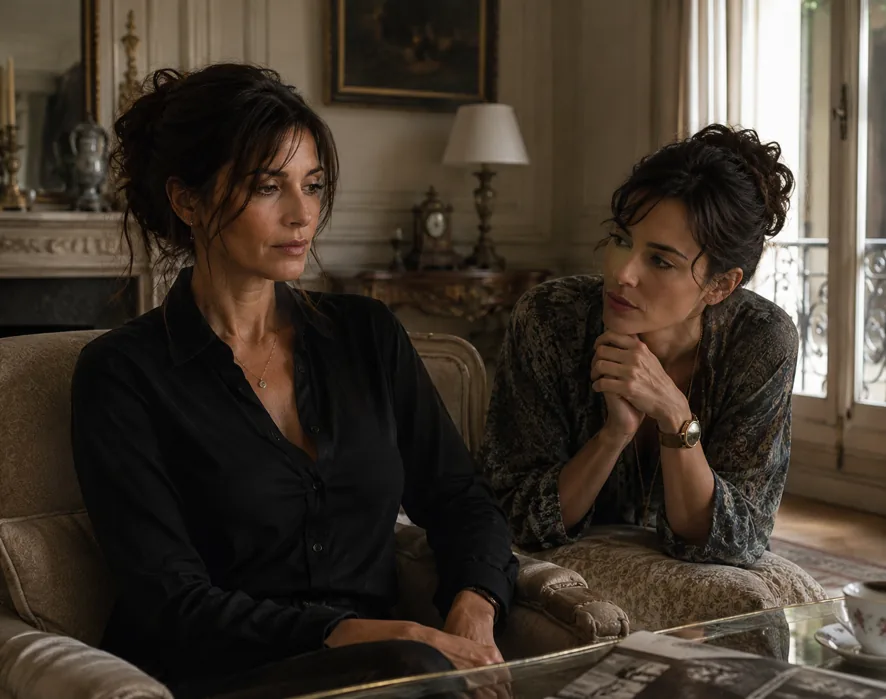
Their conversation was brief.
“That isn’t the object,” Sofi said.
“For the court, it is.”
“Not for me.”
“You are not the court.”
That was the end. The object remained in the file. The original disappeared. The case was closed.
Sofi was not part of that closure.
Leaving for Marseille had not been an act against her sister.
It had been an act against consent.
At the Passage Hotel she learned to recognise displacements and keep moving.
The problem began when the pattern began to repeat.
She was heading towards the garden when she noticed the inspector’s open file in the empty lounge. She went closer.
At the bottom of one page was a handwritten comment.
Unsigned. Only initials. J. M.
Beside them, one brief note:
“Wrong question. Check the arrangement, not the object.”
Betty read it again. She knew whose initials they were.
But now she understood that someone else was looking at the same case from another angle.
In the garden, Flobjan moved flowers as though refusing to accept the arrangement he had been given. His compositions had form, but no finality. One flower was always slightly displaced — the residue of a presence that did not want to be seen but changed the relationship between things.
Betty stood by the table and watched him move one stem by a few millimetres.
“No one will notice that.”
“I will.”
“That isn’t enough.”
“It is.”
He did not look at her.
“Everything in the rooms is too orderly,” she said.
“That’s the problem.”
“Not for them.”
“For you it is.”
She paused.
“Something has shifted.”
“Something always shifts.”
“Not this much.”
Flobjan took another flower and turned it away from the line of the others.
“Nature doesn’t repeat itself perfectly,” he said. “People do.”
Betty watched his hands. They were not as precise as hers, but they were sure. They did not remove excess. They introduced a slight asymmetry.
When he lowered his hand across the table, Sofi thought for the first time that he might know more than he showed.
The way he looked at the hotel was too calm. He did not look at objects. He looked at the relations between them, as though he were not searching for traces but for passages that already existed.
She watched him longer than she should have.
Only later would she understand that she had been wrong: Flobjan was not trying to find a passage.
He merely sensed when something no longer fit completely.
“You make disorder,” she said, still unsure whether he was an ally or a threat.
“A little.”
“Deliberately.”
“Always.”
He looked at her directly. For a moment they were silent.
“There are police at reception,” she said.
“I know.”
“They’re looking for the woman in 601.”
“I know.”
He turned towards her.
“And you?”
The question was imprecise, but enough.
“I saw the room.”
“And?”
“It doesn’t fit. It changes in a way I can’t understand.”
Flobjan gave a brief nod.
“Nothing is entirely understandable,” he said.
It was not comfort, but it resembled it.
Betty stayed another moment, looking at the arrangement that was no longer symmetrical.
The difference was slight. It changed the whole.
11 — The Setup
When she returned to the sixth floor, the corridor was empty. That did not mean no one was watching. At the Passage Hotel, absence was often a form of control.
Betty did not take the cart. She did not want a movement that explained itself. She stood in the middle of the corridor and looked along the doors as though checking a line.
Everything was in its place.
That was how she knew where the deviation was.
She unlocked 602. The room was the same as before. Air without scent. Surfaces without resistance.
She stood in the centre and closed her eyes, trying to imagine movement without people: from one room to another, without an entrance, without witnesses — only a relationship changing.
She opened the connecting door and entered 601.
Here the air was different. It carried the residue of intention. A room trying to look inhabited without bearing the consequences.
She went to the table and closed the cosmetics bag.
It was not part of her job.
That was precisely why she did it.
Then she drew the curtain a few centimetres farther. The light now fell directly on the connecting door.
She moved the suitcase the width of her palm.
Then she sat in the armchair, deliberately this time. She let her weight sink into it, remained there, then stood.
An impression remained in the fabric. Now the room had a consequence.
The white dust was still there on the carpet. She did not touch it. It looked like the residue of something that did not belong in that place.
She went to the connecting door. This time she opened it — a short, soundless movement — and stood on the threshold.
The two rooms were no longer separate.
She returned to 602. As though waiting. Then she looked around.
Everything had been shifted by the smallest degree.
Enough for the difference to be visible.
Not enough for its meaning to be obvious.
This was what the old case had lacked: the chance to observe a reaction.
In Nice, she had observed the object.
Here, she would observe the arrangement.
She closed the connecting door, but not completely. A gap of a few millimetres left a line visible only to someone looking for it.
She stepped into the corridor. Did not turn around. Did not check. The setup was complete.
At the Passage Hotel, things changed without being asked.
Now someone would have to answer.
Intermezzo — Floor Plan
After a while, you no longer remember a hotel by its floors.
You remember it by its passages. A guest sees a corridor. The staff sees time.
Chambermaids do not use the same lift as guests. Some passages exist only for carts, some only for maintenance, and some remain locked even when there is no reason for them to be.
On the sixth floor, the corridor changes width at a point you do not notice at first. The wall beside 608 is thicker than it should be. Between 601 and 602, the connecting door carries a different code from the others in the hotel.
There is a service lift that stops between floors, but has no button to open the doors.
One passage ends in a wall, although according to the building plans the corridor continues beyond it.
Room 614 exists on the internal maintenance plan, but not in the numbering shown to guests.
In the basement there is a room marked only by a code.
No name. No function.
In certain places, the signal disappears for no reason. Phones remain connected, but lose the network, as though the walls briefly held back whatever was trying to pass through.
Betty had learned all this without asking, as everyone did who stayed at the hotel long enough.
Some things are not explained. Only avoided.
12 — The Reaction
In 601, the answer had arrived.
The cosmetics bag was open. She had not left it that way. The suitcase had been returned closer to its original position, but not quite. The armchair still bore the impression of her body, although someone had tried to smooth it away by hand.
A poor attempt.
She stood between the two rooms. The connecting door was completely closed. Someone had shut it. That did not belong to the position in which she had deliberately left it.
Betty now knew enough to stop assuming.
Someone had entered. Not as a guest. Not as staff.
As someone who knew how the hotel worked.
In Nice she had never had this stage. Everything there had been visible. Here she was watching a silent, invisible process.
That was the difference.
The phone in the pocket of her uniform vibrated briefly. She did not take it out at once. She waited several seconds, as though the message might change.
Unknown number. Call me. No signature. None was needed.
Numbers change. Manner does not.
Betty looked around as though checking whether anyone could see her reading it.
No one. She called. The connection opened without sound.
“Where are you?” Betty asked.
The voice was the same. Controlled, without excess.
“I’m coming to Marseille.”
“I knew you would.”
There was a pause.
“Why are you calling me?”
“Because it’s happening again,” Justine said sharply.
“How do you know? You only suspect it.”
“It never ended.”
“For you it did.”
A brief silence at the other end.
“Don’t start,” Justine said. “You don’t know what you’re looking at.”
“I do.”
“You don’t.”
“The arm wasn’t the same. That much I know. And you let the law look the other way. But nothing here has anything to do with that case.”
“Law is none of your concern,” Justine said.
“It was.”
“Not anymore.”
Betty felt her palm begin to sweat.
“Do you have it?” Justine asked.
She did not answer at once.
“Have what?”
“Don’t pretend.”
Betty closed her eyes for a moment.
“I don’t know what you’re talking about.”
At the other end came an almost inaudible exhalation.
“If you have them — the arm and the bird’s wing,” Justine said more quietly, “don’t give them back. Not to anyone. Not anywhere.”
“Then where do they belong? And to whom?”
“Where no one is looking for them.”
The connection went dead.
Betty remained standing between the two rooms. She lowered the phone but did not put it back in her pocket at once. She held it as though it might ring again.
Justine’s interpretation — the connection she had made — surprised her. Clearly she had information Betty did not.
Suddenly Nice and Marseille were no longer two separate lines.
The hotel and the old case had become parallel structures.
And now they had intersected.
13 — Entry
The news did not spread at once. At the Passage Hotel, information moved like objects: under control, through channels invisible from outside. First those who had to know. Then those who could not help knowing. Everyone else found out only when it was already too late to react.
The alert came from reception. The guest in 601 was not answering.
Betty was on the sixth floor when the door to 601 opened again, this time without a knock. The police entered without delay. Again because of 601. The plainclothes man first, the inspector immediately behind him. The floor supervisor stood in the corridor, close enough to hear and far enough away not to see.
An unpleasantly sweet smell drifted from the room.
“Everyone out.”
Betty did not leave. Nor was she exactly inside. She stood on the boundary, in the corridor, where presence had no clear definition. She shifted almost imperceptibly, just enough not to belong to those leaving or to those entering.
The search did not stop with one room. The sweet smell drew them towards 602. They went in.
The bathroom was the last door they opened. It resisted for a fraction of a second longer than it should have.
That was the first sign.
The plainclothes man stopped.
“Here.”
It was not a call. It was confirmation. The inspector was already beside him.
Betty did not enter. There was no need. From where she stood, she could see enough, although the body itself was not directly in her line of sight.
It lay in the bathtub, arranged too neatly, as though the bath were a coffin. Arms along the body, head slightly inclined, order imposed where order did not belong. The inspector tried to move the corpse. One arm fell limply back into place; only the head dropped lower, the chin touching the collarbone.
The towels were untouched. Nothing in the bathroom bore any sign of use.
The thin inspector wrote while the plainclothes man watched.
“It isn’t the same.”
“What do you mean?” the inspector asked.
“The room.”
Betty lowered her eyes. She knew what he was seeing.
The body did not belong to the room.
In one room, a registered person who had never stayed there. In the other, a body that had never been registered.
That was why nothing was in its place.
14 — Recognition
Justine did not officially announce her arrival. That was not her way.
The train from Nice arrived early. She did not look at the sea or the city. She looked at the timetable, the time, entrances, exits — everything that could be checked. Marseille was not unfamiliar to her, although she seldom came.
In the file closed in Nice, one part had been missing. It had not been marked as an error, only as a deviation no one wanted to name. When the same pattern appeared in Marseille, Justine recognised it and knew where to look for an answer.
She did not go directly to the hotel. She stopped outside the courthouse first, checking whether what had been closed truly ended where the record said it did.
Inside, everything was as it always was: order, language without deviation, procedures leading towards a conclusion with nothing left over. That was not the problem. The problem was the mechanism that removed the difference before it became visible.
She took out her phone and opened the file, though she already knew it. One name kept recurring. Appearing without arrival, disappearing without departure. An intermediary in the art trade — present in Nice, then Marseille. Always where the pattern turned.
In Marseille, the name had been properly entered. Only the stay was missing.
It was enough.
The taxi stopped outside the hotel gates. Justine did not get out immediately. She looked at the garden and let her gaze remain there a second longer than necessary.
Presence does not stay here, she thought.
Not a conclusion. More a professional habit.
She entered through the main entrance. Reception was quiet, too quiet for morning. People moved through it without lingering, as though everyone already knew where they were going. It was not chaos. It was controlled passage.
“Inspection. Public Prosecutor’s Office, Nice.”
She did not show her credentials immediately. She waited to be looked at.
Madame Tanja came down from the floor without hurry.
“Yes?”
It was not a question.
They moved along the corridor. Justine did not look at the rooms. She looked at the intervals between them.
“Who works the sixth floor?”
Madame Tanja paused just long enough for the pause itself to register.
“The rota changes.”
Technically true. Factually false.
Justine nodded. Recorded it, though not on paper.
They entered 601. She stood in the centre and touched nothing. One look was enough.
“This has already been inspected.”
Madame Tanja said nothing.
“Not well enough. Who serviced the room?”
“The chambermaids rotate.”
Again, formally true. False according to the state of the room.
Justine opened the connecting door to 602 and stopped on the threshold.
“This isn’t empty.”
Madame Tanja did not answer. That was the answer.
In the corridor, the cart stood against the wall. Betty beside it. She did not approach.
Justine looked at her briefly. For the first time, it seemed to her that Sofi no longer stood entirely in the same reality as everyone else in the hotel.
“How long have you worked here?”
“Long enough.”
A pause. Justine nodded. This was not conversation. It was recognition.
“If there is a deviation,” she said, “you don’t report it immediately.”
“Why?”
Betty looked up.
“Because it isn’t finished.”
For the first time, Justine stopped. It was not the answer she had expected.
“The law does not wait for completion.”
Madame Tanja took one step back. Not conflict. Difference.
Justine looked at the room once more. Everything was in its place.
And therefore wrong.
“I’m staying in Marseille.”
It was not an announcement, but a decision.
She turned, then stopped at the doorway.
“If you see anything — you come to me.”
Betty did not answer. That was her answer.
Justine left. The corridor resumed as though nothing had changed.
The system was inside now, and watching.
15 — The Line
The suspicion came from the hotel records. Everything they had seen could be explained: the guest’s identity, entry, key card, stay. Each had its own version. None matched reality.
Justine looked at the documents. Everything neat, verifiable, closed inside a system that allowed no gaps. And that was precisely why a trace was missing.
“Too clean.”
It was not criticism, but a diagnosis.
Betty was not looking at the paperwork. She was looking at the way 601, 602, the corridor and the wall related to one another. Not through a passage, but through an absence, as though one missing piece would explain everything.
“This isn’t an error,” she said. “It’s deliberate.”
The suspicion changed shape. It was no longer a question of what existed. It became a question of what was missing for everything else to make sense. The answer was not in what they could see, but in what they could not find.
The line on the wall remained invisible until the light shifted.
Not a crack. Not a flaw in the plaster.
Precise — too straight to be accidental, too thin to be decorative.
Betty stood directly in front of it and shifted just enough for the light to strike from another angle. The line darkened.
Justine came closer and touched the wall.
Nothing.
She moved her hand a few centimetres and pressed.
A brief resistance. Then movement. The panel opened without sound.
Inside, nothing belonging to the room. Only an empty passage.
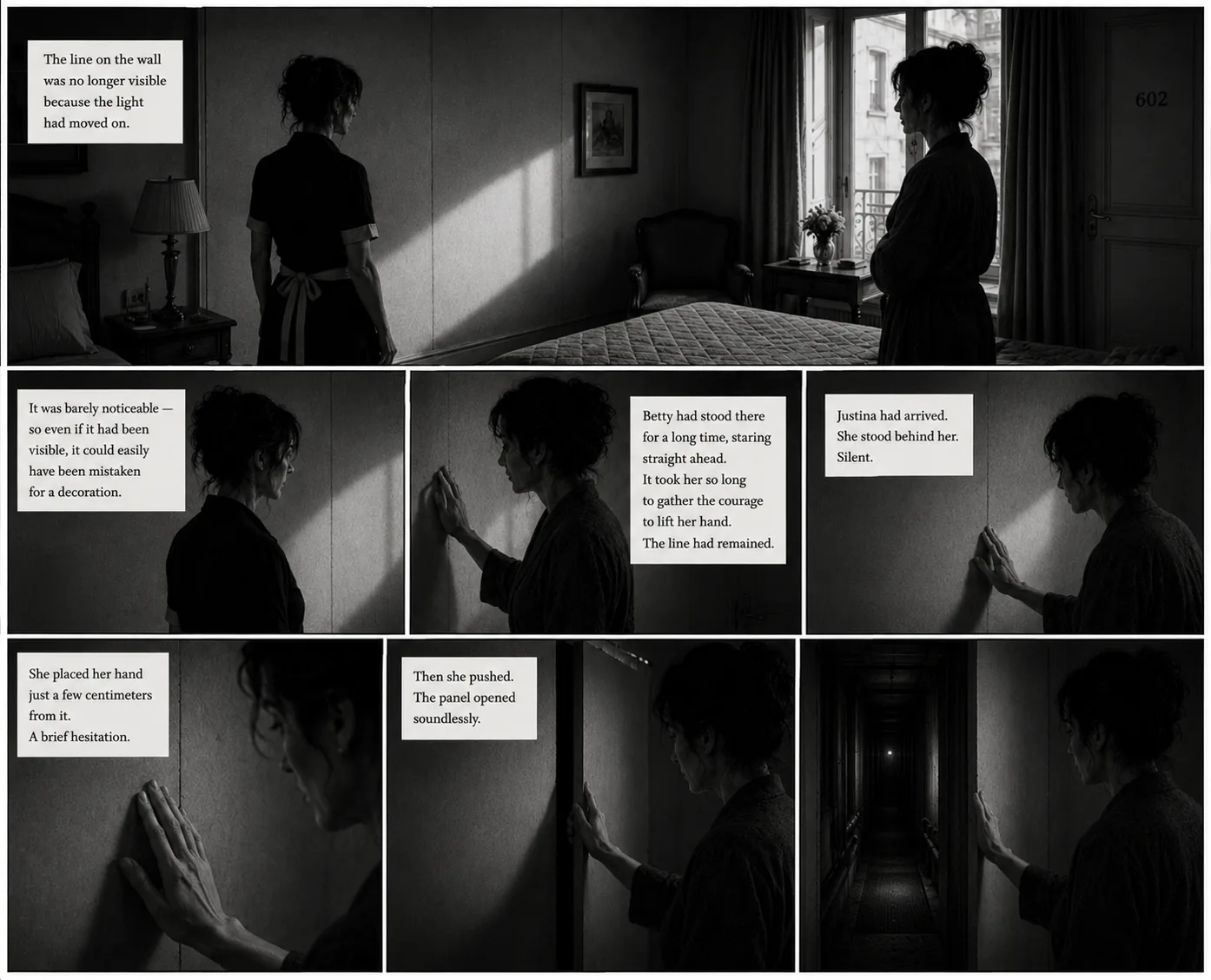
“This isn’t part of the room,” Justine said.
Betty looked into it.
“It is. Just not for guests.”
That was the boundary. Not between walls, but between the room and whatever used it.
Justine did not enter. Her gaze remained on the edge of the opening, as though measuring where the limits of what she could still acknowledge began.
Betty stepped half a pace forward, not far enough to enter, far enough to see deeper. Nothing inside held the eye. Only passage and darkness.
“If we go in, we change something. Or someone notices.”
Justine nodded once.
“Then we leave it. Evidence shouldn’t be contaminated anyway.”
She removed her hand from the wall.
“Close it.”
Betty did not move at once. She looked inside one last time, as though checking whether everything would remain there after she left.
Then she replaced the panel. The line disappeared. The wall was flat again.
But no longer the same.
16 — Observation
The lounge was no longer the same: same carpet, same chairs, same table, but now it served another purpose. It no longer belonged to conversation. It belonged to resolution.
Betty entered alone. The manager was absent. First sign. The two men were already seated. The inspector had his notebook open; the plainclothes man leaned forward, closer than necessary. One wrote. The other watched.
“Sit down.”
Betty sat. This time she did not place her hands in her lap. She left them on the table.
“Let’s go through this again. You entered 601 and 602 several times.”
“Yes.”
“And you noticed changes.”
“Yes.”
“Changes you did not report.”
A brief pause.
“They weren’t ready to be reported.”
“You decide that?”
“No.”
“And yet you said nothing.”
“You didn’t ask.”
The inspector closed his notebook. The plainclothes man kept his eyes on her. Second sign.
“Miss,” he said more slowly, “this is no longer a hotel matter.”
“I know.”
“Then answer precisely.”
She looked at him without moving.
“What did you move?”
This time she did not answer immediately.
“Nothing that altered the facts.”
“That is not an answer.”
“It is the only one that exists.”
The plainclothes man almost smiled. The inspector opened his notebook again.
“You moved the cosmetics bag.”
Betty gave no reaction.
“You closed it.”
There was a pause.
“Why?”
“It was open.”
“And?”
“It shouldn’t have been.”
“Who decides that?”
“Whoever notices.”
The inspector wrote. The plainclothes man watched.
A closed black file lay before him. He had not opened it once. From time to time he merely rested his fingers on the cover, as though checking that it was still there.
“You moved the curtain.”
“Yes.”
“Why?”
“To see the light.”
“What does light tell you?”
“Where things have not been used.”
The plainclothes man gave the slightest nod.
“You entered 602 and removed an object,” the inspector said.
This time Betty reacted, not with movement but with stillness.
“What object?”
“Don’t play games.”
“I’m not.”
“We have a trace.”
“Which one?”
“Yours.”
Silence closed around the table. The table, their hands, their eyes — nothing moved.
Betty knew the tactic. The object was bait. They did not need proof; they only needed her to believe they had something.
“If you have it,” the inspector said, “give it back.”
“I don’t.”
The plainclothes man leaned back. The inspector stopped writing for a moment.
“You know what was found?”
“A body.”
“You know who it is?”
“No.”
“No one,” he said. “No identity.”
Betty looked down at the table. For an instant, everything aligned: a body without a name, an arrangement without a stay. The same pattern seemed to have passed through both cases. She remembered Justine’s suspicion.
“This is familiar to you,” the plainclothes man said.
He did not need to explain. Betty did not answer.
“Nice.”
It was not a question, but a blow.
She looked up at him directly for the first time.
“That is not here.”
“It is now.”
“Your sister is a prosecutor,” the inspector said.
“Yes.”
“She was involved in the case.”
“Yes.”
“You were a witness.”
“I was.”
“And you left.”
“Yes.”
“Why?”
This was no longer procedural.
“Because I couldn’t stay.”
“Because of what?”
Betty held his gaze.
“Because the conclusion was wrong.”
Silence.
The inspector stopped writing. For the first time, the plainclothes man looked away.
“Miss,” the inspector said, “you speak in images.”
“No.”
“Then what are you talking about?”
“Traces.”
For a moment no one wrote anything.
“And where do the traces lead?”
“Where they shouldn’t.”
It was not an answer that closed anything. It opened the room wider.
The plainclothes man stood abruptly.
“We’re keeping you here.”
It was not a threat, but a fact.
Betty remained seated.
“Where?”
“For now, here.”
That was accurate. There was no reason to take her anywhere else.
Not yet.
At the Passage Hotel, boundaries were never outside.
They were inside.

